Jagannath Rath Yatra 2026
The Grand Chariot Festival of Lord Jagannath
About the Rath Yatra
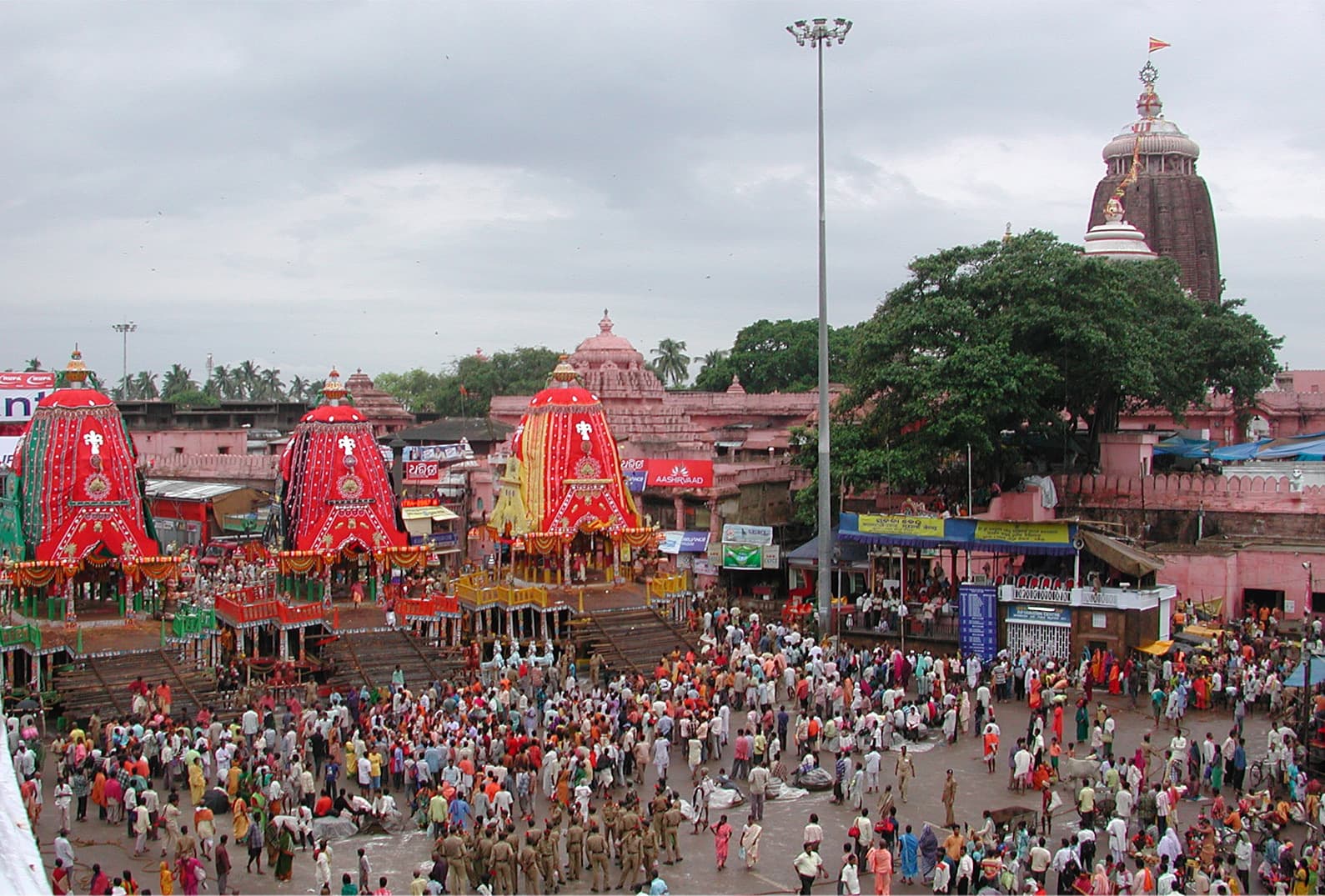
The Jagannath Rath Yatra, or Chariot Festival, is one of the oldest and grandest religious processions in the world. Held every year in the holy city of Puri, Odisha, it sees Lord Jagannath, his brother Lord Balabhadra, and their sister Devi Subhadra leave the sanctum of the Jagannath Temple to travel to the nearby Gundicha Temple — the only time the deities come out for public darshan.
In 2026 the main Rath Yatra falls on Thursday, 16 July. Millions of devotees gather on the Grand Road (Bada Danda) to pull the three towering, freshly built chariots by hand — an act believed to wash away sins and grant blessings. After a week at Gundicha, the deities return on Bahuda Yatra (24 July), are adorned in golden attire for the Suna Besha, and finally re-enter the temple at Niladri Bijaya.
Rath Yatra 2026 Schedule
| Date | Ritual | Significance |
|---|---|---|
| Late June 2026 | Snana Yatra | Ceremonial bathing of the deities on Jyeshtha Purnima. |
| Early July 2026 | Anasara & Netrotsava | Deities rest out of public view, then reappear in their youthful form (Nabajaubana). |
| Wed, 15 July 2026 | Gundicha Marjana | Ceremonial cleaning of the Gundicha Temple before the deities arrive. |
| Thu, 16 July 2026 | Rath Yatra (Main Day) | Pahandi procession, Chhera Pahara, and the chariot pull to the Gundicha Temple. |
| Mon, 20 July 2026 | Hera Panchami | Goddess Lakshmi visits the Gundicha Temple in search of Lord Jagannath. |
| Thu, 23 July 2026 | Sandhya Darshan | Evening darshan at Gundicha, believed to be especially auspicious. |
| Fri, 24 July 2026 | Bahuda Yatra | The return chariot journey of the deities to the Jagannath Temple. |
| Sat, 25 July 2026 | Suna Besha | The deities are adorned in dazzling golden ornaments (golden attire) on the chariots. |
| Sun, 26 July 2026 | Adhara Pana | A sweet drink is offered to the deities on the chariots. |
| Mon, 27 July 2026 | Niladri Bijaya | The deities re-enter the sanctum, marking the conclusion of Rath Yatra 2026. |
Auxiliary ritual dates may shift slightly with the lunar calendar and temple administration announcements. Confirm timings locally before travelling.
The Three Chariots
Nandighosha
Lord Jagannath's chariot — the tallest, with red and yellow canopies.
- Wheels16
- ColoursRed & Yellow
Taladhwaja
Lord Balabhadra's chariot, marked by its palm-tree emblem.
- Wheels14
- ColoursRed & Green
Darpadalana
Devi Subhadra's chariot, also called Devadalana.
- Wheels12
- ColoursRed & Black
How to Reach Puri
The festival takes place on the Grand Road (Bada Danda) between the Jagannath Temple and the Gundicha Temple in the heart of Puri. The town is well connected by air, rail, and road, with special services laid on during the yatra.
Biju Patnaik International Airport, Bhubaneswar (BBI) — about 60 km. Taxis and buses run to Puri.
Puri Railway Station is a major terminus with direct trains from across India; extra trains run during the yatra.
Well connected via NH-16; about 60 km from Bhubaneswar and 35 km from Konark on the scenic Marine Drive.
Autos and cycle-rickshaws serve the town, but expect road closures and diversions near the Bada Danda on festival days.
On 16 and 24 July, large stretches around the Grand Road are closed to vehicles. Plan to walk the last leg, and follow the Odisha Police traffic and crowd-management advisories.
What to Carry
Essentials
- • Light, breathable cotton clothing
- • Cap or umbrella (July sun & rain)
- • Comfortable, easy-to-remove footwear
- • Drinking water & light snacks
- • Small cross-body bag (no loose valuables)
Health & Safety
- • Personal medicines & basic first aid
- • Hand sanitiser & a face mask
- • Note the nearest police/medical help desk
- • Sunscreen & an electrolyte/ORS sachet
- • Keep children close; fix a meeting point
Documents & Money
- • Government photo ID (Aadhaar / Voter ID)
- • Hotel booking confirmation
- • Cash (UPI/networks may be patchy)
- • Charged phone & power bank
- • Emergency contacts written down
Nearby Places to Explore
Extend your Puri trip with these nearby destinations — all within easy reach for a day visit.
Konark Sun Temple
13th-century UNESCO World Heritage chariot temple.
Chilika Lake
Asia's largest brackish lagoon — dolphins and migratory birds.
Frequently Asked Questions
The main Rath Yatra (Chariot Festival) falls on Thursday, 16 July 2026, when Lord Jagannath, Lord Balabhadra, and Devi Subhadra ride from the Jagannath Temple to the Gundicha Temple on their three giant chariots. The deities stay at Gundicha for a week, and the return journey (Bahuda Yatra) takes place on Friday, 24 July 2026, with the festival concluding on Niladri Bijaya around 27 July 2026.
Each deity has a uniquely designed chariot. Lord Jagannath rides the Nandighosha (about 16 wheels, with red and yellow canopies), Lord Balabhadra rides the Taladhwaja (red and blue/green), and Devi Subhadra rides the Darpadalana, also called Devadalana (red and black). The chariots are rebuilt with fresh wood every year and assembled in the weeks before the yatra.
Chhera Pahara is one of the most beloved moments of the Rath Yatra. The Gajapati King of Puri — considered the first servant of Lord Jagannath — ceremonially sweeps the chariot platforms with a golden broom and sprinkles sandalwood water. This act symbolises that before the Lord, all devotees are equal regardless of rank, and only after it is performed can the chariots be pulled.
Yes. Unlike the inner sanctum of the Jagannath Temple, which is restricted, the Rath Yatra is open to everyone — devotees of all faiths and nationalities can join the crowds in pulling the thick ropes of the chariots along the Grand Road (Bada Danda). It is believed to be highly auspicious. Expect enormous crowds, so follow police barricades and crowd-management instructions.
No. The Rath Yatra is a free public festival held on the Grand Road; there is no ticket or registration to witness or join it. However, the Odisha administration sets up extensive crowd control, and some vantage points, hotel terraces, or organised viewing galleries along the route may be sold by private operators. Booking accommodation well in advance is essential.
Arrive in Puri at least a day early and reach the Grand Road by early morning, as crowds swell through the day. Many visitors book a hotel or a paid balcony/terrace view along the Bada Danda for a safe, elevated vantage point. Stay hydrated, wear light clothing and comfortable footwear, keep your group together, note the location of police help desks, and avoid carrying valuables in the dense crowds.
The cycle includes Snana Yatra (the ceremonial bathing of the deities) in late June, followed by Anasara (a fortnight when the deities rest out of public view), Netrotsava/Nabajaubana (first public appearance), Gundicha Marjana (cleaning of the Gundicha Temple on 15 July 2026), the Rath Yatra itself (16 July), Hera Panchami, Sandhya Darshan, Bahuda Yatra (return, 24 July), the splendid Suna Besha (golden attire, around 25 July), Adhara Pana, and finally Niladri Bijaya (around 27 July).
Carry a government photo ID, drinking water, light snacks, a cap or umbrella for the July sun and possible rain, comfortable footwear (you may need to remove it in certain areas), hand sanitiser, any personal medicines, and a fully charged phone with a power bank. Keep cash handy as networks and digital payments can be unreliable in the dense crowds, and use a small cross-body bag rather than carrying loose valuables.
Location & Map
Quick Facts
Don't Miss
- • Pahandi — the swaying deity procession
- • Chhera Pahara by the Gajapati King
- • Pulling the chariot ropes
- • Suna Besha (golden attire)
Crowd Safety
- • Arrive a day early; reach the route by dawn
- • Consider a paid balcony/terrace view
- • Follow police barricades & instructions
- • Stay hydrated; mind the July heat
Where to Stay
- • Hotels along Bada Danda (route-view)
- • Sea-beach belt & C.T. Road guesthouses
- • Book months ahead — rooms sell out fast
Helpline & Contacts
Photography
- • Chariots against the Grand Road crowds
- • Elevated balcony shots of the procession
- • Suna Besha golden ornaments
- • No photography inside the temple sanctum
© 2026 TripGuides.in. All Rights Reserved.