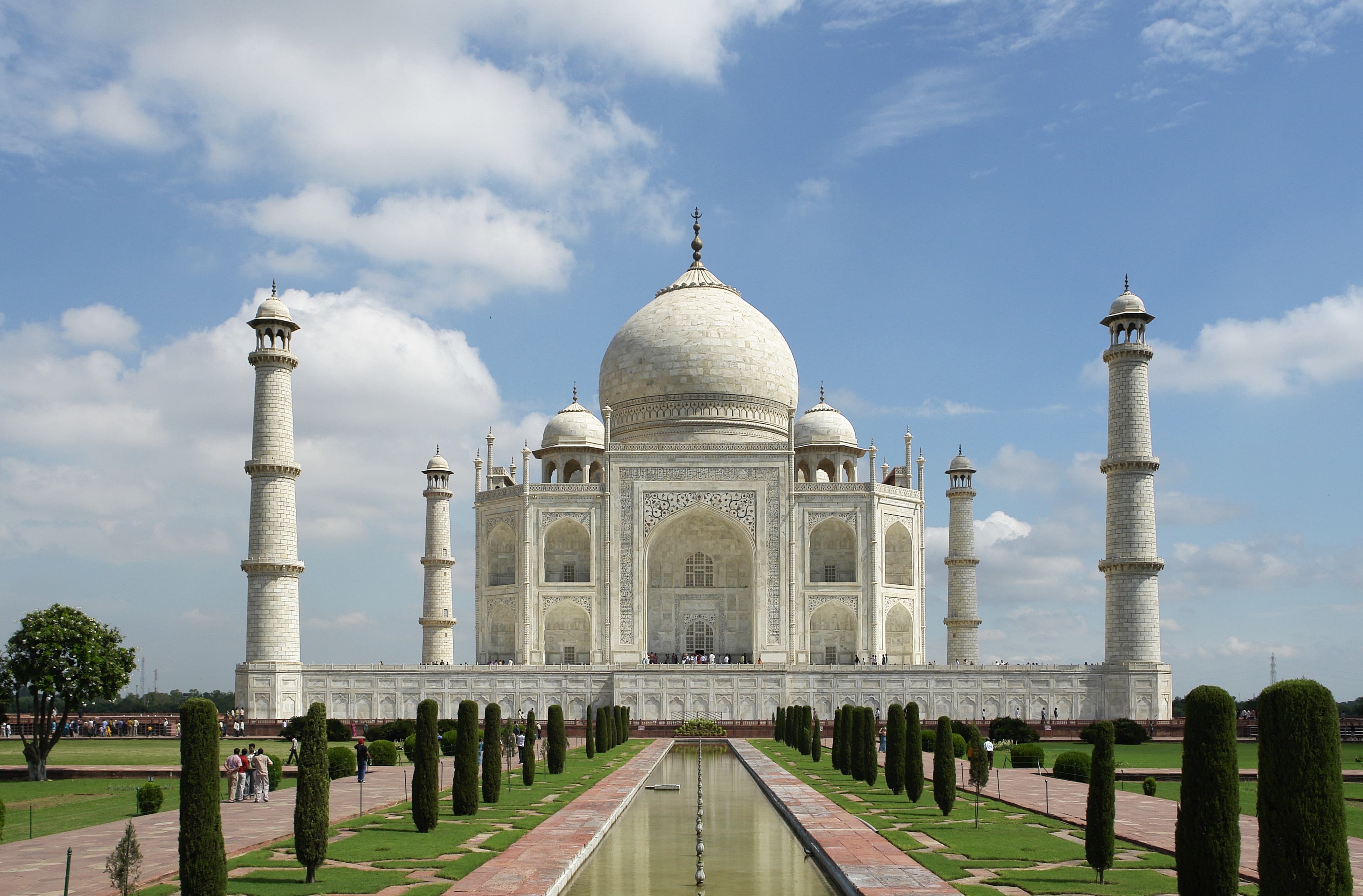
Taj Mahal
The Crown of Palaces • Symbol of Eternal Love
About the Taj Mahal
The Taj Mahal is an ivory-white marble mausoleum on the south bank of the Yamuna river in the Indian city of Agra. It was commissioned in 1632 by the Mughal emperor Shah Jahan to house the tomb of his favorite wife, Mumtaz Mahal.
The Taj Mahal complex is believed to have been completed in its entirety in 1653 at a cost estimated at the time to be around ₹32 million, which in 2023 would be approximately ₹70 billion (about US$1 billion).
The construction project employed some 20,000 artisans under the guidance of a board of architects led by the court architect to the emperor, Ustad Ahmad Lahauri. The Taj Mahal was designated as a UNESCO World Heritage Site in 1983 for being " jewel of Muslim art in India and one of the universally admired masterpieces of the world's heritage".
Historical Background
1631 - The Beginning
Mumtaz Mahal dies during childbirth, and Shah Jahan begins planning her memorial.
1632 - Construction Begins
Foundation work starts with thousands of workers and artisans from across the empire.
1648 - Main Structure Complete
The main mausoleum and surrounding structures are finished.
1653 - Full Completion
The entire complex, including gardens and outbuildings, is completed.
1983 - UNESCO Recognition
Declared a World Heritage Site for its outstanding universal value.
Architectural Marvel
Design Elements
- • Perfect symmetry and geometric precision
- • White Makrana marble from Rajasthan
- • Intricate pietra dura inlay work
- • Four minarets leaning slightly outward
- • Central dome with lotus finial
Dimensions
- • Height: 73 meters (240 ft)
- • Base: 58 meters × 58 meters
- • Minaret height: 40 meters
- • Garden area: 300 meters × 300 meters
- • Total area: 17 hectares
Best Time to Visit
Sunrise (6:00 AM)
Experience the magical golden hour with fewer crowds and perfect lighting for photography.
Daytime (9:00 AM - 4:00 PM)
Explore the complex in detail, visit the museum, and enjoy the gardens.
Sunset (5:30 PM)
Witness the changing colors and the romantic atmosphere as the sun sets.
Essential Visiting Tips
What to Bring
- • Valid ID proof (passport/driving license)
- • Comfortable walking shoes
- • Water bottle (no food allowed)
- • Camera (tripods not allowed)
- • Hat and sunscreen
Important Notes
- • No food or drinks inside
- • Remove shoes before entering main mausoleum
- • Photography allowed (no flash)
- • Dress modestly
- • Security check mandatory
Photography Guide
Best Photo Spots
- • Diana Bench: Classic reflection shot
- • Main Gate: Framed view of the mausoleum
- • Garden Paths: Symmetrical compositions
- • River Bank: Backdrop with Yamuna River
- • Minaret Base: Architectural details
Camera Settings
- • Aperture: f/8 to f/11 for sharp details
- • ISO: 100-400 for best quality
- • Shutter Speed: 1/125s or faster
- • Lens: Wide-angle (16-35mm) recommended
Nearby Attractions
Agra Fort
A UNESCO World Heritage site, this red sandstone fort was the main residence of the Mughal emperors.
Entry Fee: ₹50 (Indians), ₹650 (Foreigners)
Fatehpur Sikri
A deserted city that was once the capital of the Mughal Empire, known for its stunning architecture.
Entry Fee: ₹50 (Indians), ₹650 (Foreigners)
Itmad-ud-Daulah
Known as the "Baby Taj," this tomb is considered a draft of the Taj Mahal.
Entry Fee: ₹30 (Indians), ₹310 (Foreigners)
Mehtab Bagh
A garden complex across the Yamuna River offering spectacular views of the Taj Mahal.
Entry Fee: ₹200 (All visitors)
Frequently Asked Questions
Yes. The Taj Mahal is open for night viewing on the night of the full moon and two nights before and after. Only 400 visitors are allowed per night, and tickets must be booked in advance through the Archaeological Survey of India (ASI). Visitors are given 30-minute time slots and view the monument from a viewing platform rather than entering the main complex.
Photography is allowed freely in the outer gardens and around the reflecting pool. Inside the main mausoleum building, photography is permitted but flash photography and tripods are strictly prohibited. Drone photography requires a special permit from the ASI and the Directorate General of Civil Aviation and is rarely granted to tourists.
Sunrise is widely considered the best time — the Taj Mahal glows with a soft pink-gold light and crowds are at their thinnest. Gates open at 6:00 AM (30 minutes before sunrise in winter). Late afternoon (3:00–4:00 PM) is another good window for golden-hour photography. Midday, especially between 10:00 AM and 2:00 PM, is the most crowded and hottest period.
A thorough visit takes between 2.5 and 4 hours. This includes time to walk through the main gateway, explore the gardens, enter the mausoleum, visit the mosque on the west side, and stop at the small on-site museum. If you want to include the nearby Mehtab Bagh garden for a rear view of the Taj across the Yamuna, budget an additional hour.
Prohibited items include food and drinks (except small water bottles), tobacco products, tripods and selfie sticks, earphones, knives, lighters, and any electrical items other than phones and cameras. Bags are scanned at the gate and prohibited items must be deposited at the storage facility near the entrance. Modest dress is expected; revealing clothing may be requested to be covered.
Tickets can be booked online through the ASI ticketing portal (asi.payumoney.com) or at the ticket counters at the East, West, and South gates. Online booking is strongly recommended during peak season (October–March) and for the night viewing slot. Entry tickets are separate from the inner mausoleum ticket (an additional ₹200 for Indians, included in the foreign-visitor ticket).
The Taj Mahal is approximately 230 km from New Delhi. The fastest option is the Gatimaan Express train from Hazrat Nizamuddin station, which covers the distance in about 100 minutes. The Shatabdi Express from New Delhi station takes roughly 2 hours. By road via the Yamuna Expressway, the journey takes around 2.5–3.5 hours depending on traffic. Avoid travelling by road during festival weekends when the expressway can experience significant delays.
Yes. The Taj Mahal is closed every Friday to allow for Juma prayers at the mosque inside the complex. It is open all other days of the week from sunrise to 30 minutes before sunset. The complex also observes limited access during significant Islamic religious occasions, so it is worth checking the ASI website before planning a Friday-adjacent visit.
Location & Map
The Taj Mahal is located in Agra, Uttar Pradesh, India, on the south bank of the Yamuna River.
Address:
Taj Mahal, Agra, Uttar Pradesh 282001, India
Coordinates:
27.1751° N, 78.0421° E
Quick Facts
Entry Fees
Opening Hours
How to Reach
Agra Airport (AGR) - 12 km from Taj Mahal
Agra Cantt Station - 6 km from Taj Mahal
Delhi-Agra Expressway - 3 hours drive
Regular buses from Delhi, Jaipur, and other cities
Contact Information
Weather Guide
Local Cuisine
Agra Petha
Sweet candy made from white pumpkin
Mughlai Cuisine
Rich, aromatic dishes with spices
Street Food
Chaat, samosas, and local snacks
Shopping Guide
Marble Inlay Work
Beautiful handicrafts and souvenirs
Leather Goods
Shoes, bags, and accessories
Textiles
Traditional fabrics and garments
© 2026 TripGuides.in. All Rights Reserved.